There are thousands of books out there on public speaking. There are endless tips on the do's and don'ts of giving a presentation, and while they may be helpful in certain areas, nothing comes close to helping with the adrenaline rush that courses through our veins when we stand in front of a crowd. For example, how am I supposed to use appropriate facial expressions when I can barely remember to use my lungs to breathe?
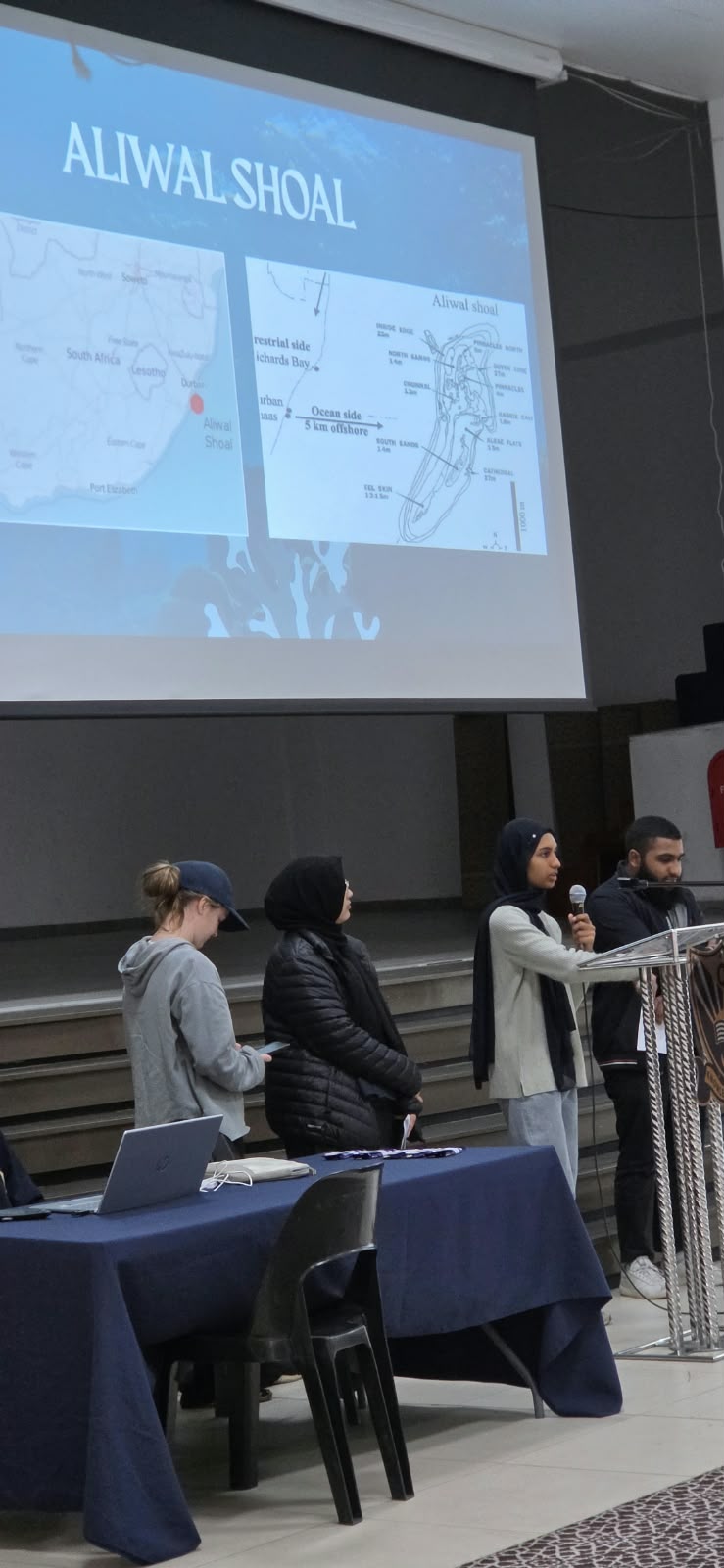
My name is Tasneem Sheriff, I am a Speech language therapy student at UKZN and I intern for the Aliwal Shoal Ocean Leadership program. I'm only 21 years old, but I have now delivered marine education presentations to crowds of up to 200+ people at Orient Islamic School, and Port Shepstone Islamic School in 2026. My peers as well as the students and teachers at these schools say I give presentations 'like a natural', but it certainly didn't feel that way.
Don't get me wrong, you can look at the crowd and imagine someone naked, but how is that supposed to ease your nerves when your hands start shaking and refuse to stop, or when your throat closes up, making it hard to breathe, or you start sweating like a dog? Not to mention the overthinking that starts to creep in and clouds over your vision. You can practically keel over from the thought of having to speak to a room of random strangers who might not even remember you tomorrow. Sounds like an absolute nightmare, am I right?
Before we get into the whole crippling anxiety thing, let's ask the hard question. Why do we have to give presentations to begin with?
If we look back at our history, people used to come together and share stories about their experiences, over bonfires, or near the ocean. We learnt knowledge from other people and those stories were passed on to future generations. Even today, in schools, or university lectures we learn from the knowledge of other people's experiences, and while the methods may have changed, the concept has remained the same. We connect through shared experiences and learn from different ones.
Now, imagine if we didn't share those experiences or knowledge that we've attained? We wouldn't have half the knowledge that we have today. We wouldn't know how to read or write or even that the Earth is round! From what I've seen in schools, many people don't know much about the ocean either. Here's a little insider information; before this internship, I didn't know much about the ocean either. But that is why it is of utmost importance to share our knowledge with other people, because you never know what knowledge you risk being lost. So what's a little bit of distress in the face of history?
So, how do we overcome our crippling anxiety and severe urge to want to run in the complete opposite direction and hide under our blankets in the comfort of home?
Well, after much consideration, a fair amount of panic and probably a few unnecessary breakdowns, I've come up with a few things that might help. And no, I'm not going to tell you to imagine the audience naked. We've already established that this advice is questionable at best!
1. BREATHE!
Giving a presentation can be intimidating, but you don't have to let it define the trajectory of your entire speech. Close your eyes. Let the room fall away and forget about everything and everyone. Take a deep breath in and slowly let it out. The idea is to bring yourself back to the present moment instead of allowing your mind to run a marathon through every possible thing that could go wrong. Because trust me, your brain will come up with some absolutely ridiculous scenarios when given the opportunity.
You might stumble over your words. You might forget a sentence. You might even pronounce a word so badly that you question whether you've ever spoken English a day in your life. And guess what? The world will keep spinning.
When I gave a presentation at Orient, I felt like my insides were squeezing together in an attempt to break free, but then I took a deep breath and remembered that no one knew what I was going to say, and that this presentation was only going to take 20 minutes of time from my day and after that I would continue on with my day. I had to remind myself that I was there to share my experience of what I had learnt and seen underwater, sort of like a show and tell. After that, I was able to breathe a little lighter and ground myself like a root of a tree because I was confident in my ability to give a good talk.
So, breathe. You are allowed to be nervous, and you are allowed to take a moment before you begin. You don't have to be completely calm to give a good presentation.

2. Pretend That You're Answering a Question
Have you ever noticed how much easier it is to talk to someone when they ask you a question about something you know? You don't spend the entire time analysing the position of your hands, wondering whether you're making enough eye contact, or questioning if your face looks like you've just witnessed a crime. You simply answer the question.
So why should giving a presentation be any different?
Shift your focus from How am I coming across? to What am I trying to tell these people?
When I gave a presentation in Port Shepstone, the message I wanted to give was that there was a world out there, the Ocean, that we haven't explored. I wanted to encourage the community to take on opportunities that are unfamiliar. I started by sharing my experience of how I applied for the Aliwal Ocean Leadership internship, and how little knowledge I had of the ocean when I first started. I pretended that someone had asked me what the internship was about and what it felt like to be underwater, and somehow my words had begun to flow almost effortlessly.
The moment you stop treating yourself as the main attraction and start focusing on the message you're delivering, things become a little less terrifying. Your presentation stops being about proving that you're intelligent, confident, articulate and worthy of standing in front of people. For me it was about communicating ocean conservation because a lot of people have very little access to this kind of information. There has been historical lack of exposure to the ocean due to apartheid, which has created a gap in spreading awareness and advocating for the ocean. That is why it is important to have different voices speaking up and getting other people involved. You never know who you might inspire….
3. Flip the Script
Instead of walking into the room thinking, What if they think I'm stupid?, ask yourself, What if they actually learn something from me today? Instead of thinking, What if I embarrass myself? Consider, What if I do better than I expected?
When I gave a talk at Orient and Port Shepstone schools about ocean conservation, our internship, and our experiences with marine life, I remember feeling intimidated at first. But as I started speaking, I realised that the students were learning about things they had never experienced or heard about before. They were genuinely engaged, asking questions about marine life and our experiences in the ocean, and eagerly putting their hands up, not just because they wanted chocolates, but because they were excited to participate and share what they knew. Seeing their curiosity and enthusiasm reminded me that what might seem like an ordinary story to us could open up an entirely new world for someone else. By the end, we walked away feeling like we had made a real difference.
And here's another thing that might help; stop treating your audience like a room full of strangers and start treating them like people you're having a conversation with. They're simply people who have come to listen, learn and perhaps share a thing or two themselves.
Of course, there is always the possibility that you ask a question, and the entire room goes silent. Not a single hand raised. Not even a cough. Just you, your question and the sound of your confidence slowly leaving your body.
Don't panic. It happens.
And if you do mess up? Well, congratulations. You're human. Welcome to the club. Membership is free, although the embarrassment can be quite expensive.
But that's also what made our experience at the Aliwal Shoal Ocean Leadership Internship so special: we supported each other. Some of us were genuinely against the idea of giving a talk in front of an audience. Muhammed, for example, was one of them. But when he stepped up to give a talk at Orient, he absolutely blew us away. He was confident, eloquent, and engaging, everything he had been so hesitant to be. Watching him reminded us that sometimes, all someone needs is a little encouragement and the opportunity to prove themselves wrong. Having a supportive group around you makes all the difference. You don't have to be fearless to do something great; sometimes, you just need people who believe in you until you start believing in yourself.
You don't have to be fearless to do something great; sometimes, you just need people who believe in you until you start believing in yourself.
4. Stop Waiting to Feel Confident
We tend to think that confident people wake up in the morning, look in the mirror and announce that they're ready to conquer the world. Maybe some people do. Personally, I suspect that a good number of them are also fighting for their lives internally while maintaining an impressively straight face.
The difference is that they do it anyway.
And that's something we learned at the Ocean Leadership Internship. Personally, I was fairly comfortable speaking to people because my Speech-Language Therapy degree at UKZN has given me opportunities to work on my communication skills. But even then, speaking in front of an audience is a different experience. I remember giving talks at Orient and Port Shepstone schools, and afterwards, having teachers and students come up to tell me how much they had enjoyed them. It felt good knowing that something I had shared had genuinely resonated with someone.
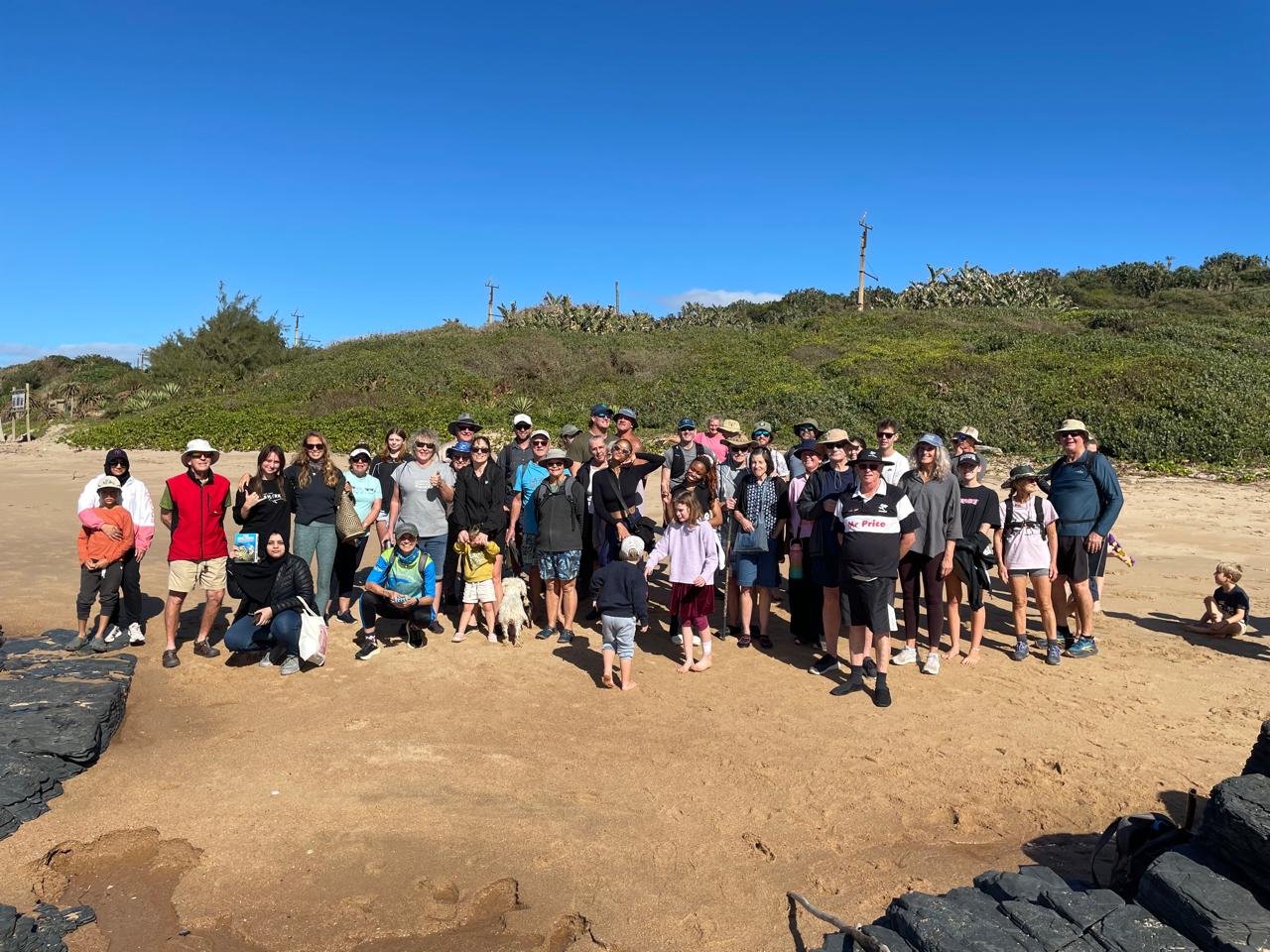
But what stood out to me even more was watching my fellow interns step outside their comfort zones. Some of them were absolutely terrified of public speaking, yet they did it anyway. I watched Caity speak to an audience of around 50 people on International Marine Protected Areas Day. She later told me how nervous she had been, but you would never have guessed it from watching her. She spoke so well, and the audience walked away having learned something new.
Caity, Meara, Faatima and I also had the opportunity to guide those 50 people through the tidal zone, introducing them to the marine animals we encountered and explaining more about them. And honestly? It felt surprisingly natural. We were so excited to share what we knew about these creatures that we barely stopped to think about how many people we were talking to. Looking back, though, 50 people is a lot of people!
That experience taught me something important: sometimes, when you're passionate about what you're sharing, your focus shifts from worrying about yourself to helping others understand something new. And sometimes, you don't even realise how much you've grown until you look back at what you were once afraid to do.
And the more you put yourself in situations that challenge you, the more familiar those situations become. Your first presentation might feel like the end of the world. Your second might feel slightly less like the end of the world. And by your tenth, you might finally realise that standing in front of a crowd isn't nearly as terrifying as your brain initially made it out to be.
Notice that I said might. I'm not going to sit here and promise that you'll suddenly become a fearless motivational speaker who can deliver a two-hour TED Talk without breaking a sweat. Some of us are simply more nervous than others, and that's okay.
One of the things I realised during the Aliwal Shoal Ocean Leadership Internship is that you don't have to be a perfect speaker to make a difference. You just have to be willing to get up and share what you know.
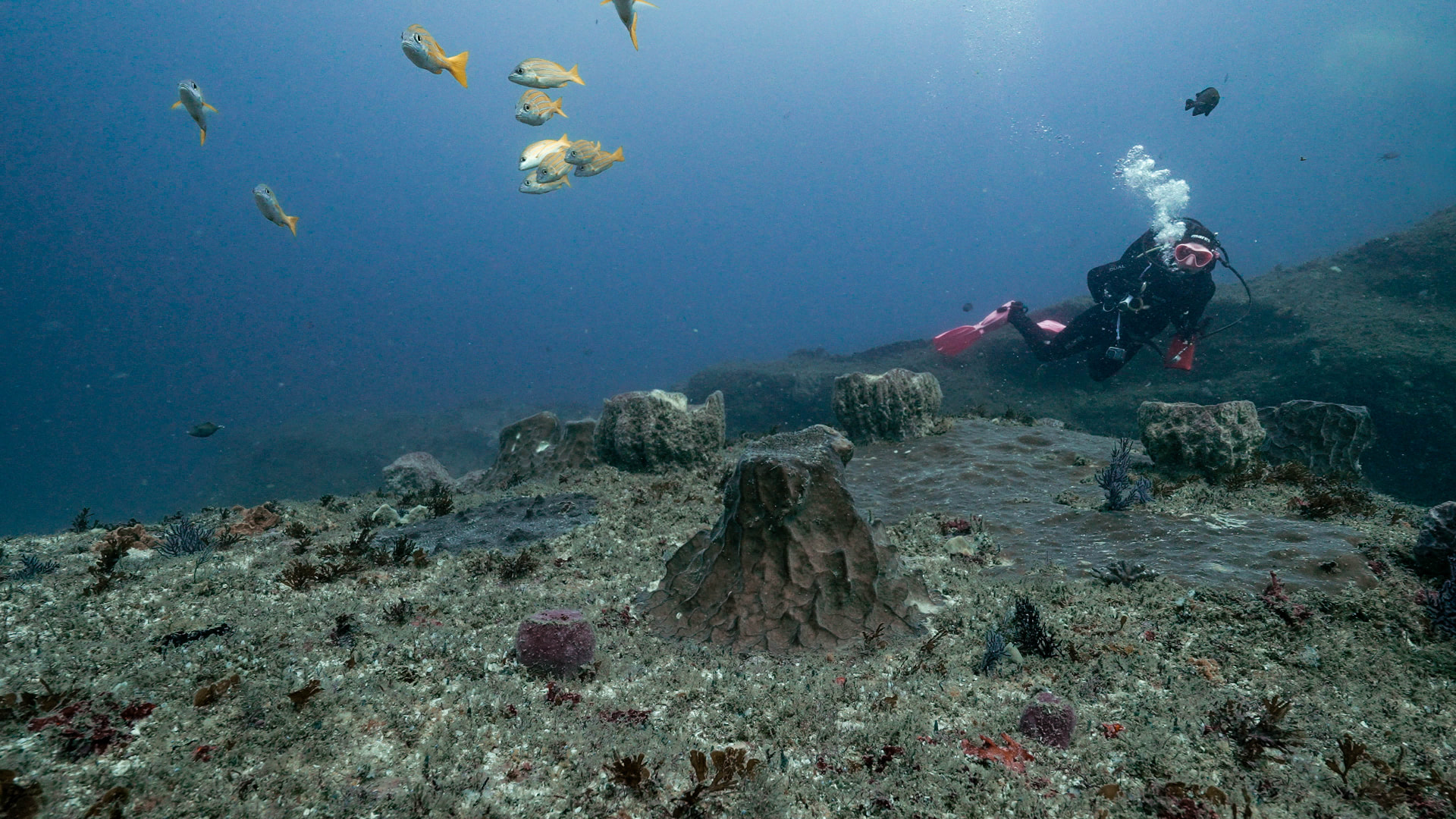
Throughout the internship, we had some incredible opportunities to encounter marine life firsthand. From exploring the underwater world during our scuba training to discovering the fascinating creatures that inhabit the tidal zone, we were constantly learning something new. We weren't just reading about marine conservation in textbooks; we were experiencing it. We encountered animals we had previously only seen in pictures, learnt about their behaviours and habitats, and gained a much greater appreciation for the importance of protecting our oceans.
We wanted to share all of that with other people!
So, Is Public Speaking Really That Terrifying?
Well, sometimes, yes. I'm not going to pretend that standing in front of a room full of people is always a wonderful experience. There are still moments when the thought of having everyone's attention on me makes me question why I ever agreed to do it in the first place.
But I think my experience at the Ocean Leadership Internship changed the way I look at public speaking. Before the internship, I probably associated being a good speaker with being articulate, confident and knowing exactly what to say. Now, I think it's much simpler than that. It's about being willing to put yourself out there, even when you aren't entirely comfortable.
And if I could give you one piece of advice, it would be this: Stop waiting until you're no longer nervous to start doing things. You might be waiting a very long time.
You might shake. You might sweat. You might stumble over your words.
Do it anyway…